Two Numbers, 25 Sizes: Designing a Parametric Catamaran in the Bitbybit Designer v1.6

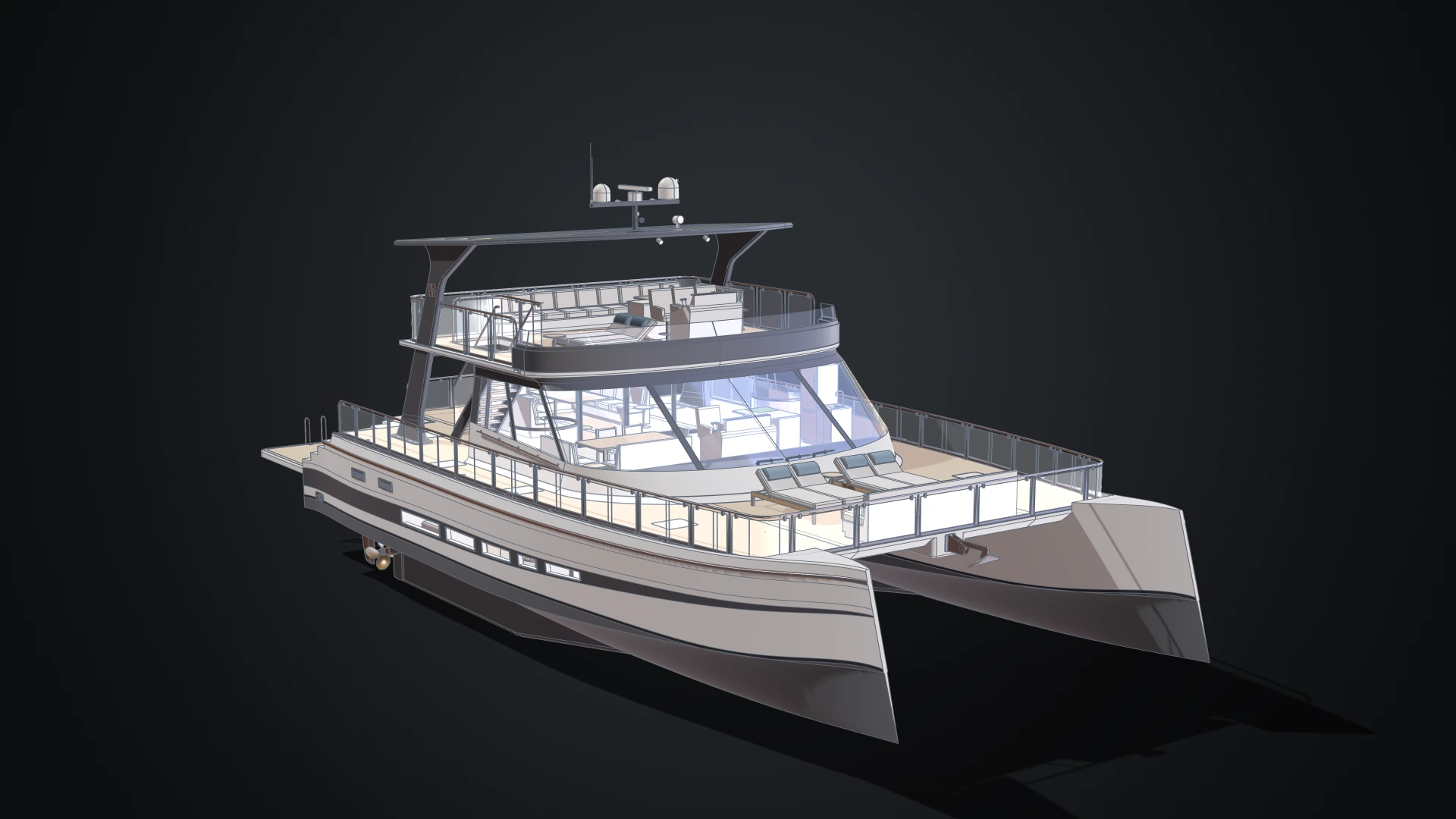
Give the Bitbybit Designer two numbers, a length and a beam, and it rebuilds a luxury power catamaran from the hull lines up: decks, cabins, engines, rails, stairs and furniture. The smallest boat, at 15 metres, seats 24 guests and the largest, at 25, seats 60. There are 25 named sizes, and none of them is a scaled copy of another, because the things people touch stay at the size people need.
The boat is 61 design documents and 3,011 features, the most parametric model we have shown in the Designer. It is also a good way to show what arrived in Bitbybit v1.6: a standard parts library, parameters you can play, better ways to see into a large assembly, and a view that stays comfortable at 20 metres.
Watch the boat come together
The film opens with a flight through the finished boat, then goes through its documents in their own order: nine sections and the loft through them, the cuts that make the rooms, the parts going aboard, sections along and across the hulls, the bill of materials and three of the sizes. Each part replays its own feature history with the rollback bar. Stretches that are sped up are marked as a time-lapse.
A person, an agent and the Designer
We did not click this boat together. We described it to an AI coding agent, which wrote it as ordinary design documents through a small program of its own. Then we opened each round in the Designer, turned it, cut it open and said what was wrong. There were more than twenty rounds in about a week.
What matters is what came out. The rule from the start was to use the Designer's own features wherever one exists, so the result would read as a design and not as numbers baked in by a script. Open it and you find a feature tree: 1,368 sketches, 914 extrudes, 175 revolves, 164 booleans, 101 fillets, 77 mirrors, 68 lofts and 61 sweeps, each one with its dialog. Anything repeated is one part placed many times, the way it would be bought: one stanchion, one bolt, one cushion.
Our notes were the kind you would give any designer. "Make sure your design withstands reality" came when the roof turned out not to touch its columns, something a clash check cannot see, because a part floating beside another never clashes. So the agent wrote a check that every part must be carried by something, all the way back to the hull. "Stop lofting" sent the roof's fins back as flat faces and fillets. "The sink is unreachable" gave the saloon hard rules for headroom and for the way through.
Because the documents are data, they can also be tested. A script builds the boat at every size with the free @bitbybit-dev/occt package and fails any size that seats fewer than 24 guests or tilts a propeller shaft past 15 degrees. This is what we meant when we said the Designer is made for two kinds of author at once. The agent did the writing and the checking, and the Designer is where a person could see the result and judge it.
Two numbers, 25 sizes
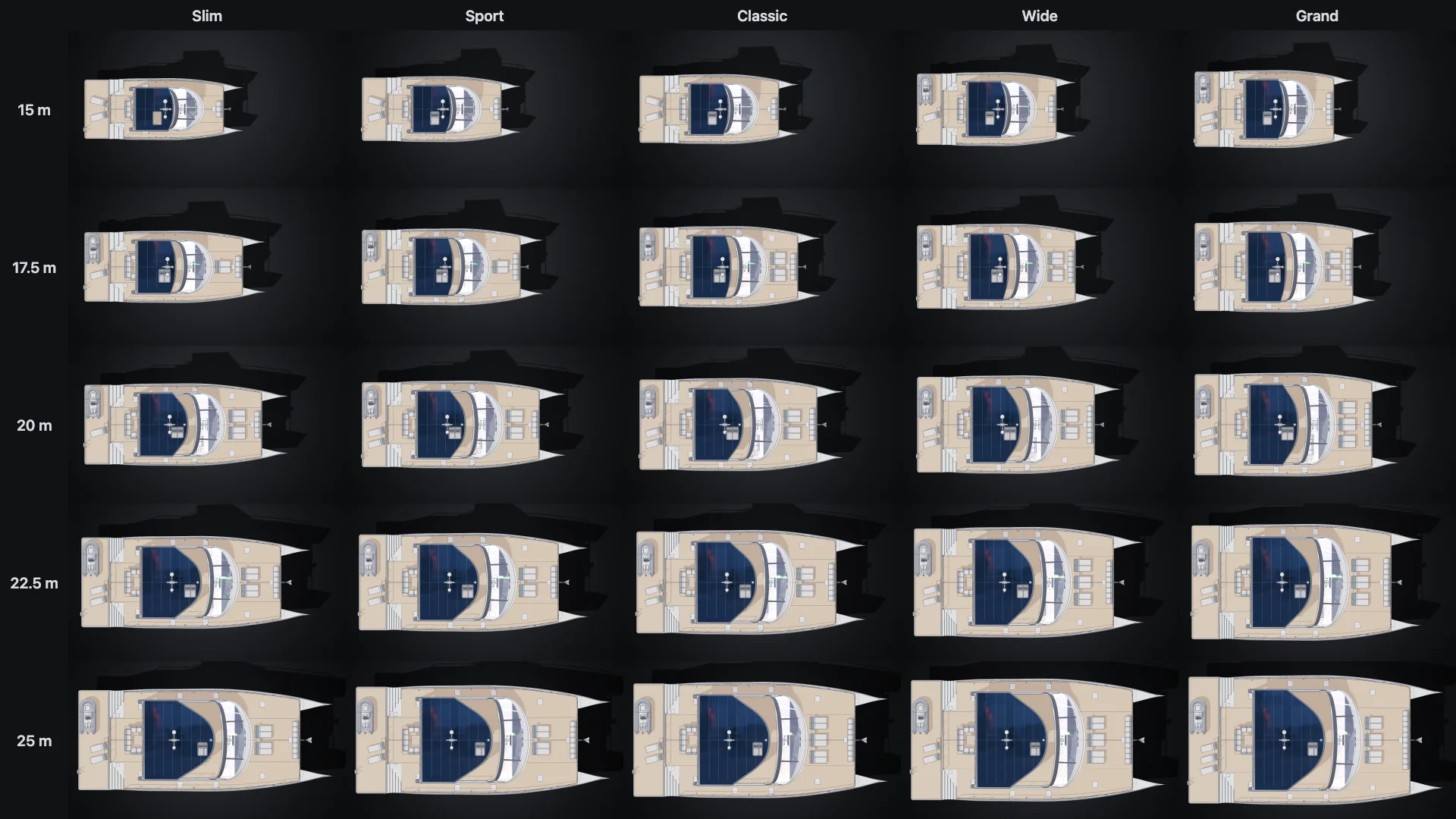
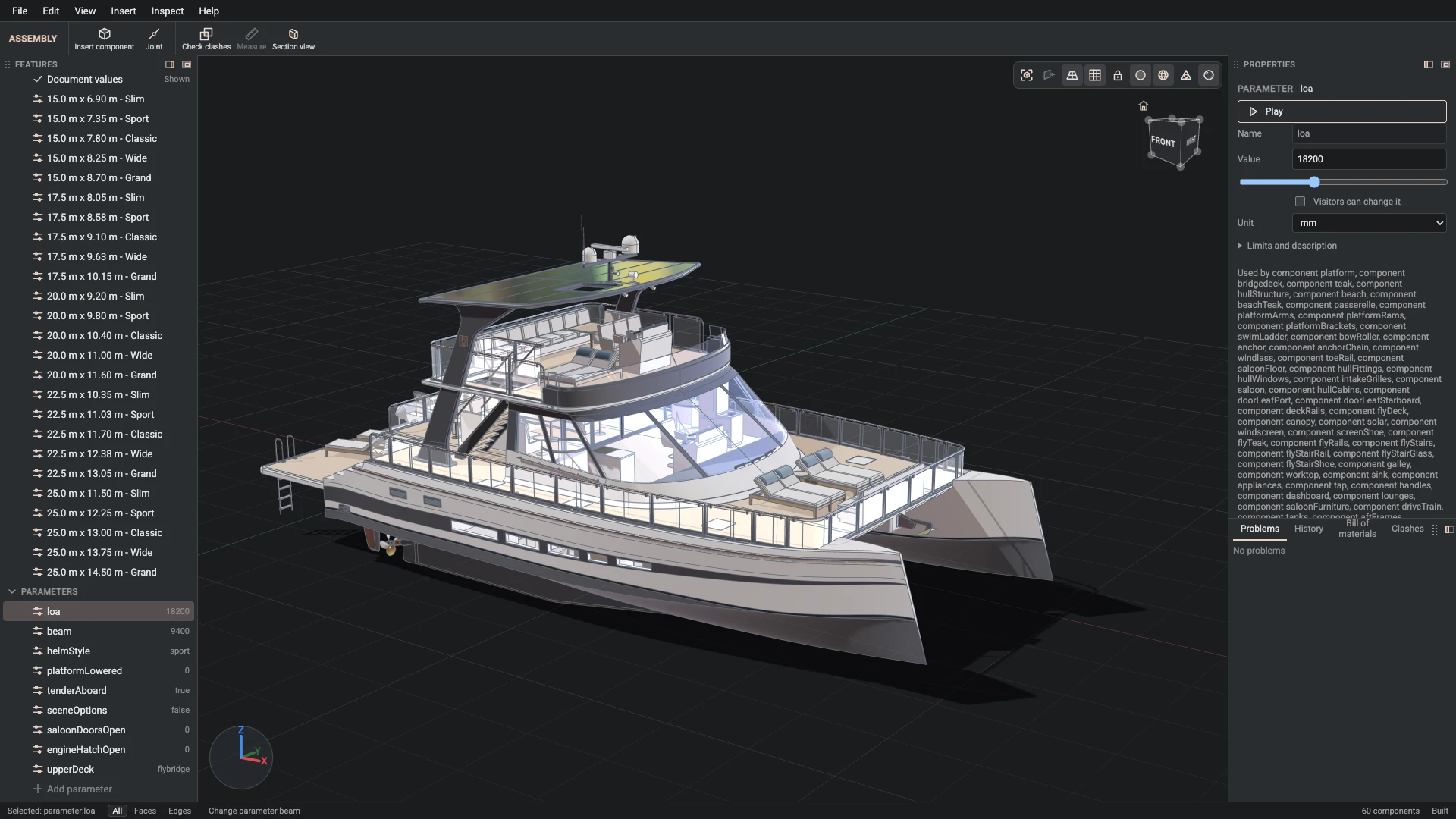
Everything starts at loa, the length of the hulls, and beam, the overall width. Every other size in the model is an expression of those two, or of something worked out from them: 7,804 of the 9,392 parameter entries across its documents are expressions. Twenty-five configurations keep the sizes we check: five lengths from 15 to 25 metres, each in five beams from Slim to Grand, at 0.46 to 0.58 of the length. The picture above is all 25 at one scale, built in the Designer one after another, with no failed feature in any of them.
Scaling a boat by a factor is easy, and wrong. What makes this a design is what stays put. Cabin headroom is 1,950 mm at every size, the deck rail is 800 mm high, a seat is 450 mm, and the stair to the flybridge has 11 rises. So the zones take the length, and the counts follow the zones:
- Guests: 24 seated on the 15 m Slim, 43 on the 20 m Classic, 60 on the 25 m Grand.
- Cabins: the 15 m boats have engine rooms and tanks in their hulls. From the 17.5 m Sport up, the hulls also hold cabins, a head and a spiral stair down from the saloon.
- Beach club: one to three loungers a side on the swim platform, and from the 15 m Wide a tender in place of the port ones.
- Machinery: propellers from 653 to 1,100 mm, and generators from 12 to 21 kW.
- Details: four to seven transom steps, and a wet bar on the flybridge from 20 metres.
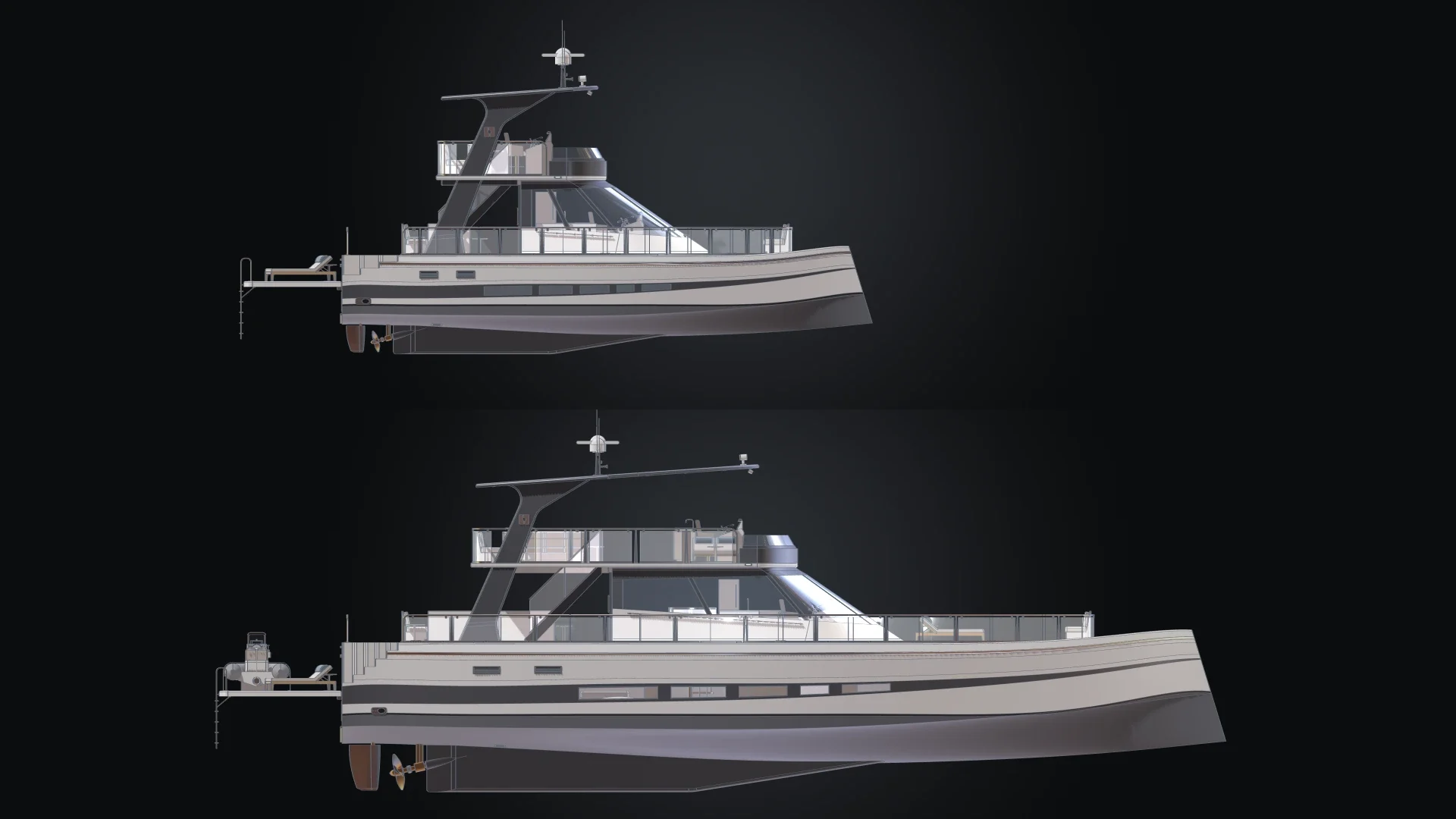
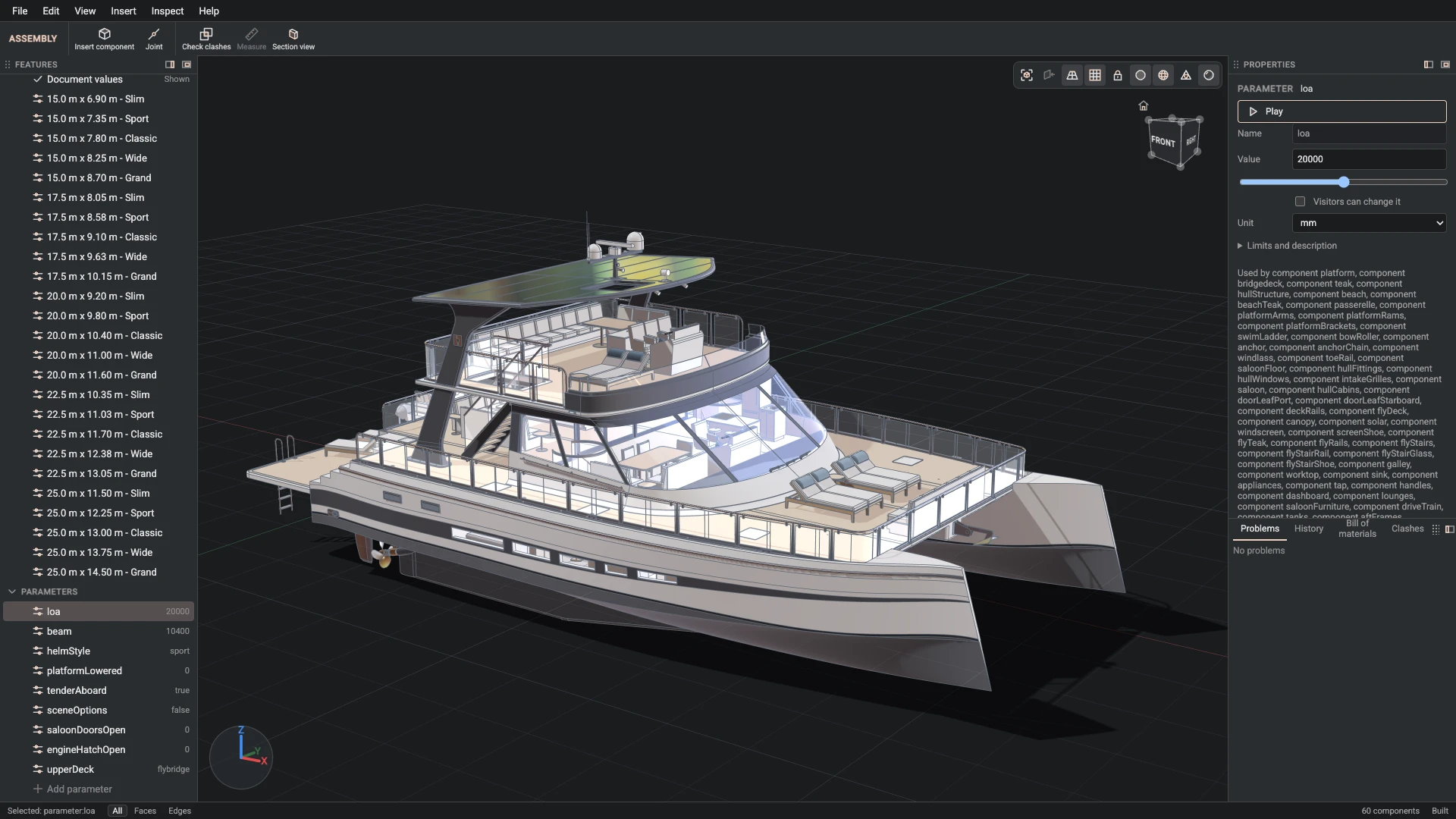
The two numbers are not limited to those names. We typed in 18.2 metres by 9.4, a size no configuration holds, and the boat was worked out for that too, with no failed features and 420 parts placed.
Nine sections draw the hull
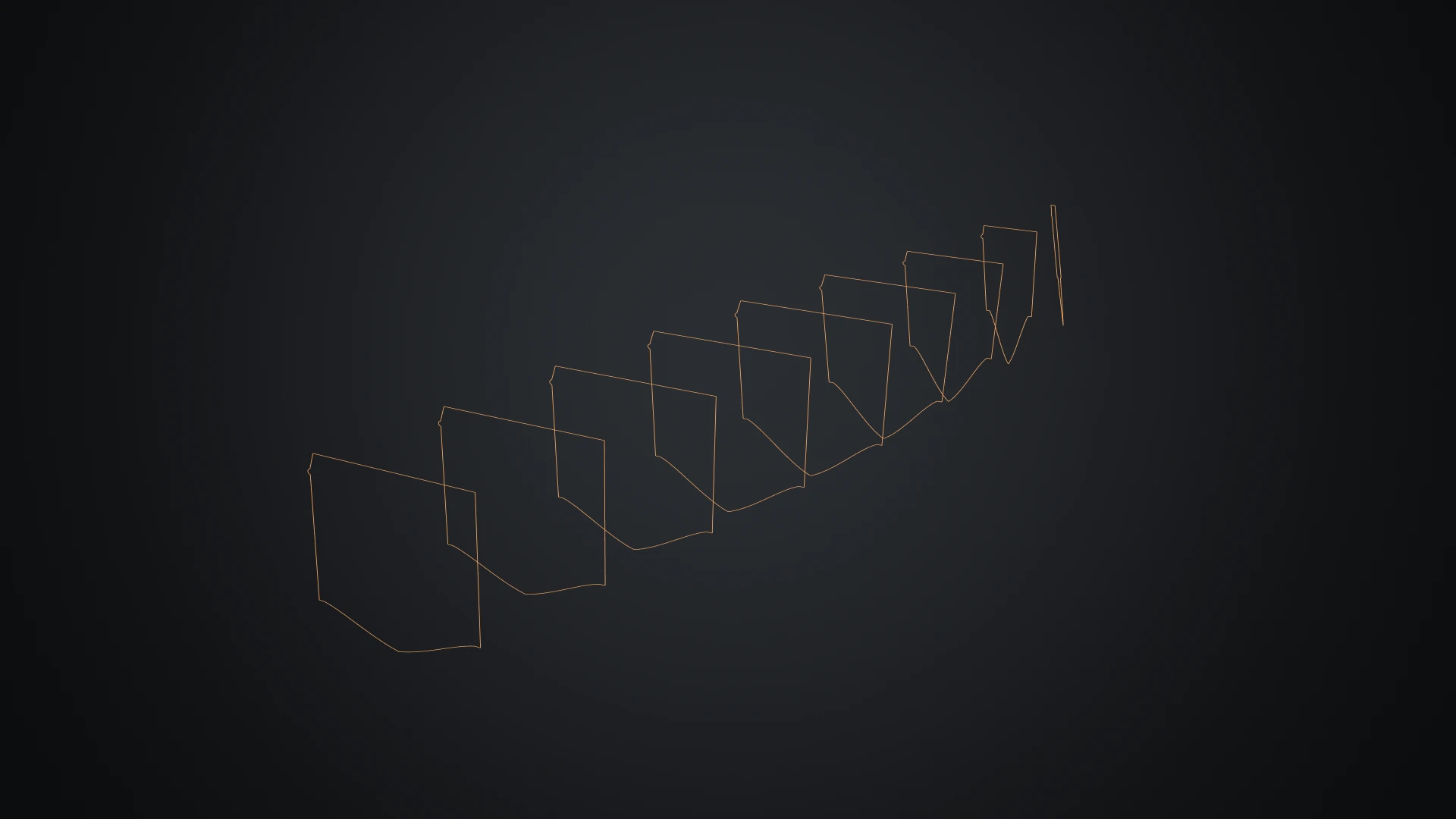
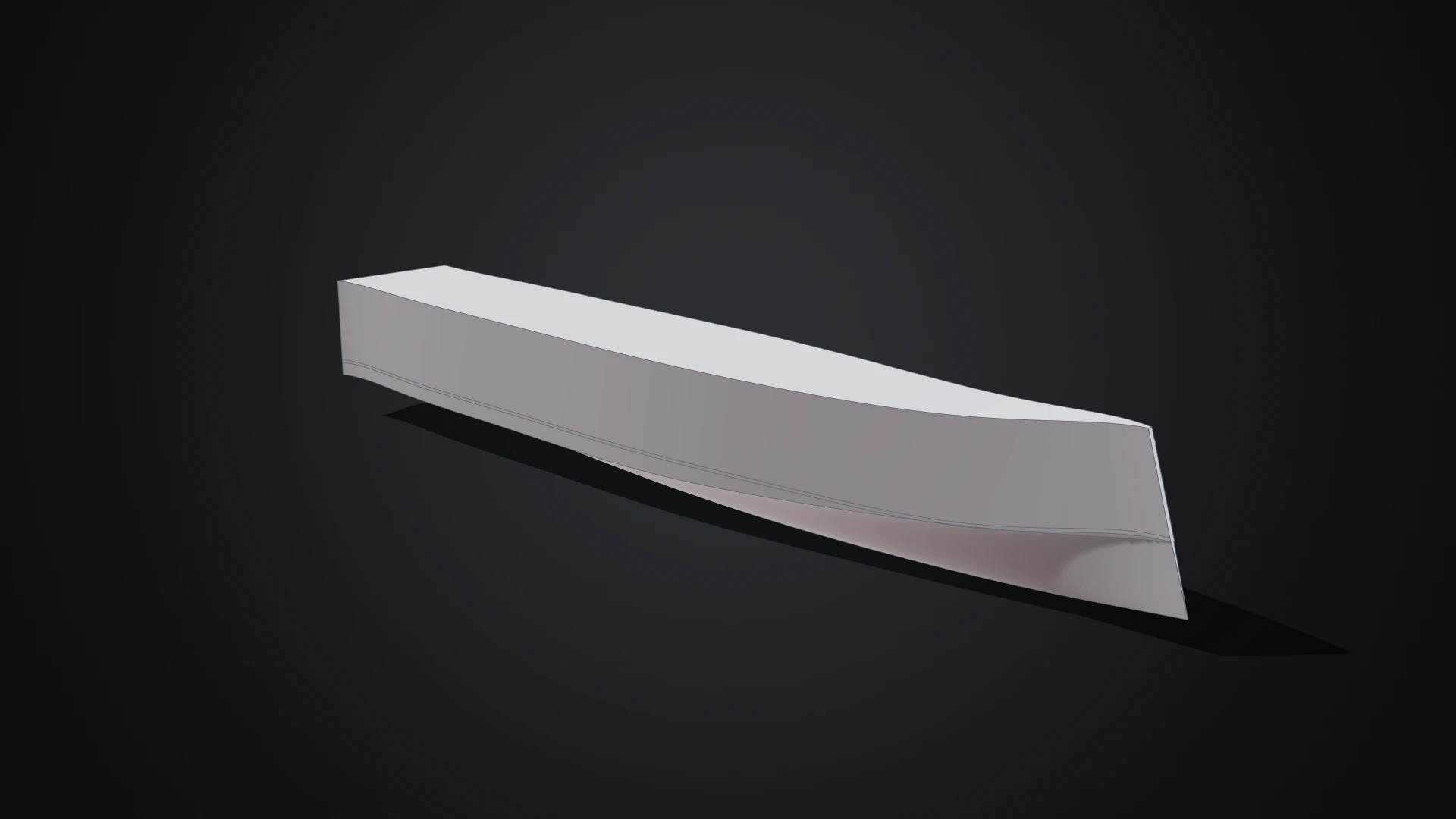
The hull starts the way a boat is lofted on paper, as nine cross-sections from the transom to the stem. Every section carries the same 17 named segments, from bottomOut and chineOut to stripe, nameBand and deck. One loft runs through all nine, so each segment becomes a face of its own, and the paint bands exist by construction. Later features and appearances find those faces by name, at every size.
The starboard hull is a mirror of the port one. A single boolean then carves the transom steps, the foredeck and the rooms below from the hull, each one modelled first as a solid.
Options are parameters too
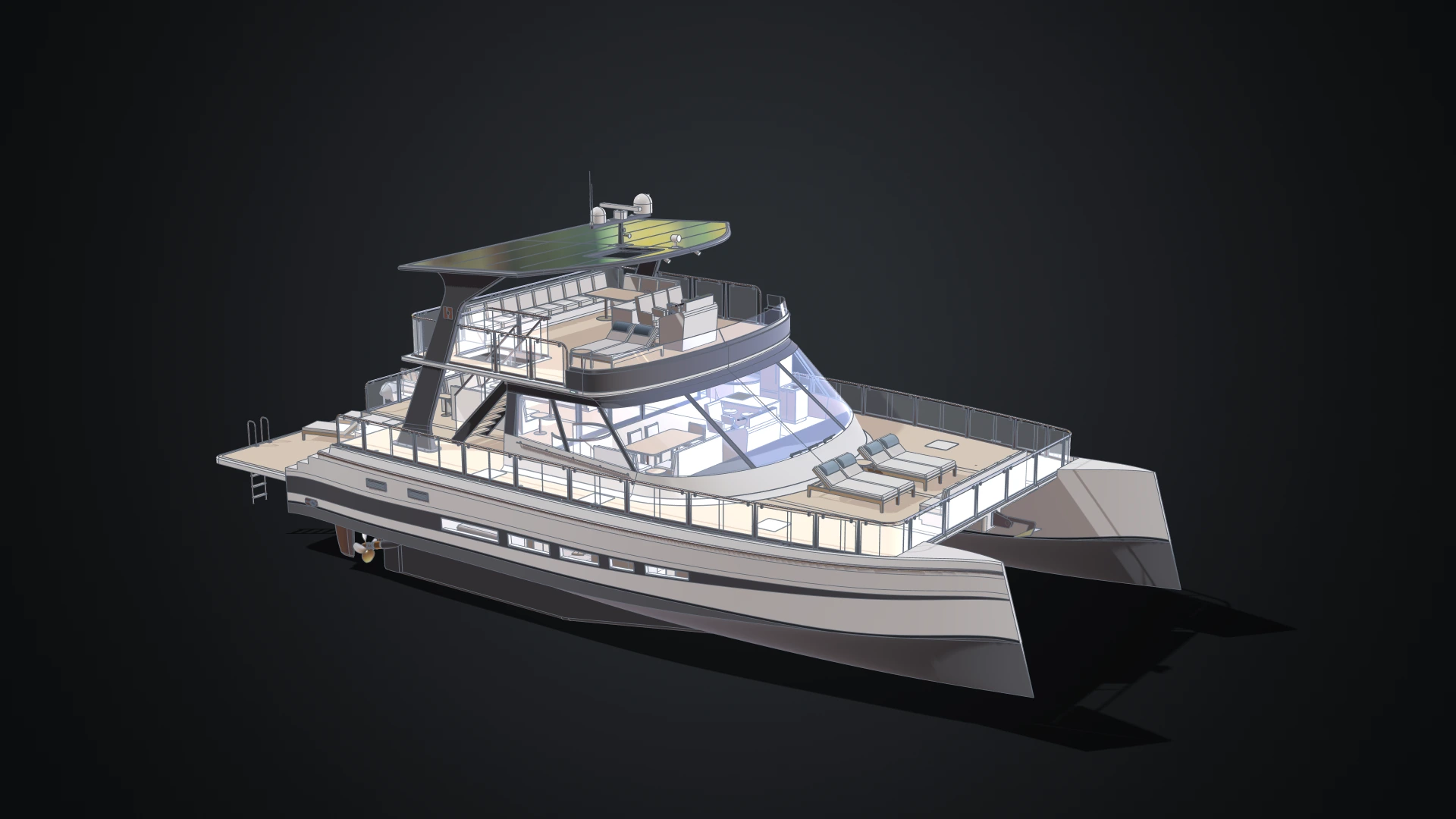
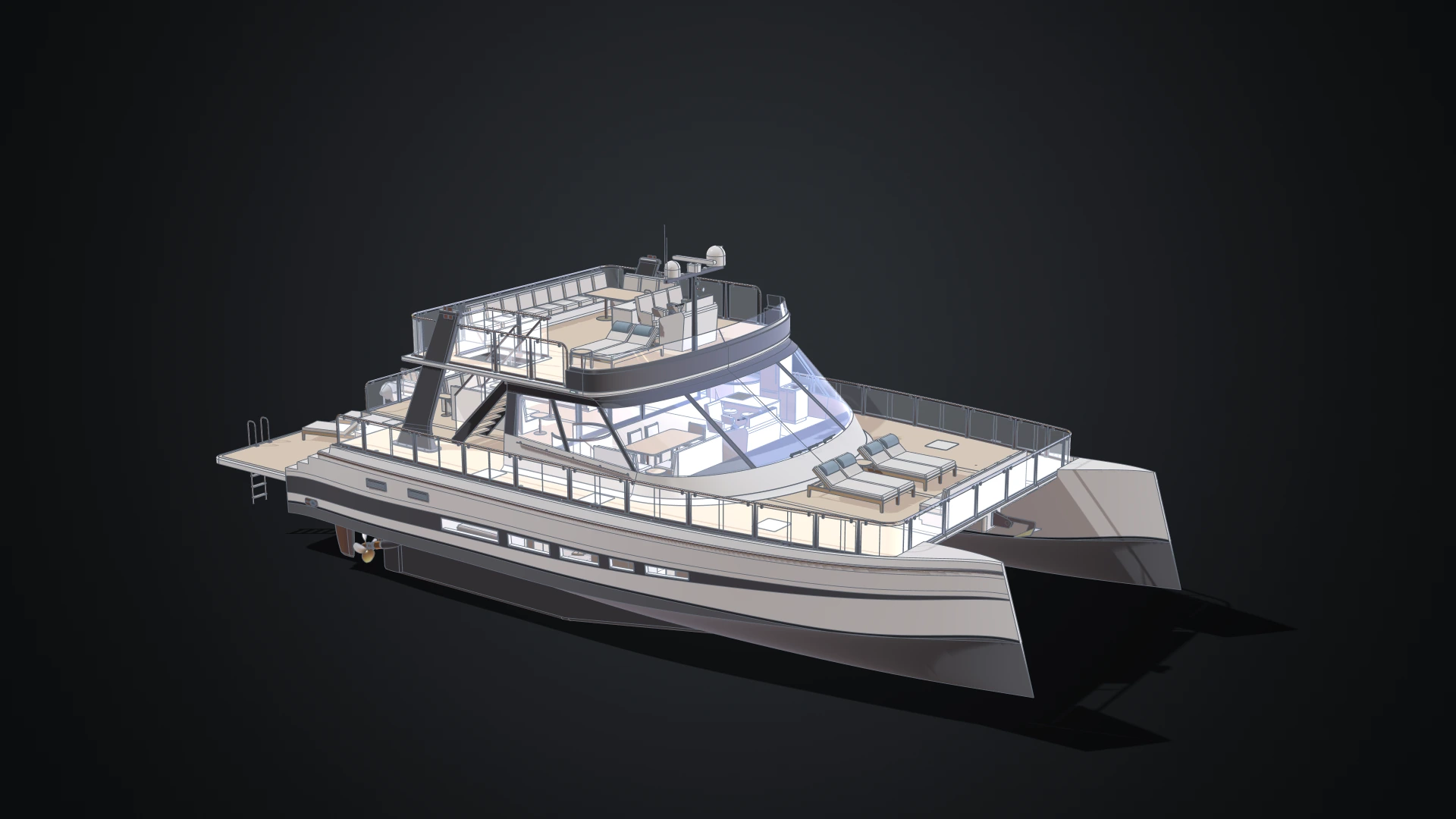
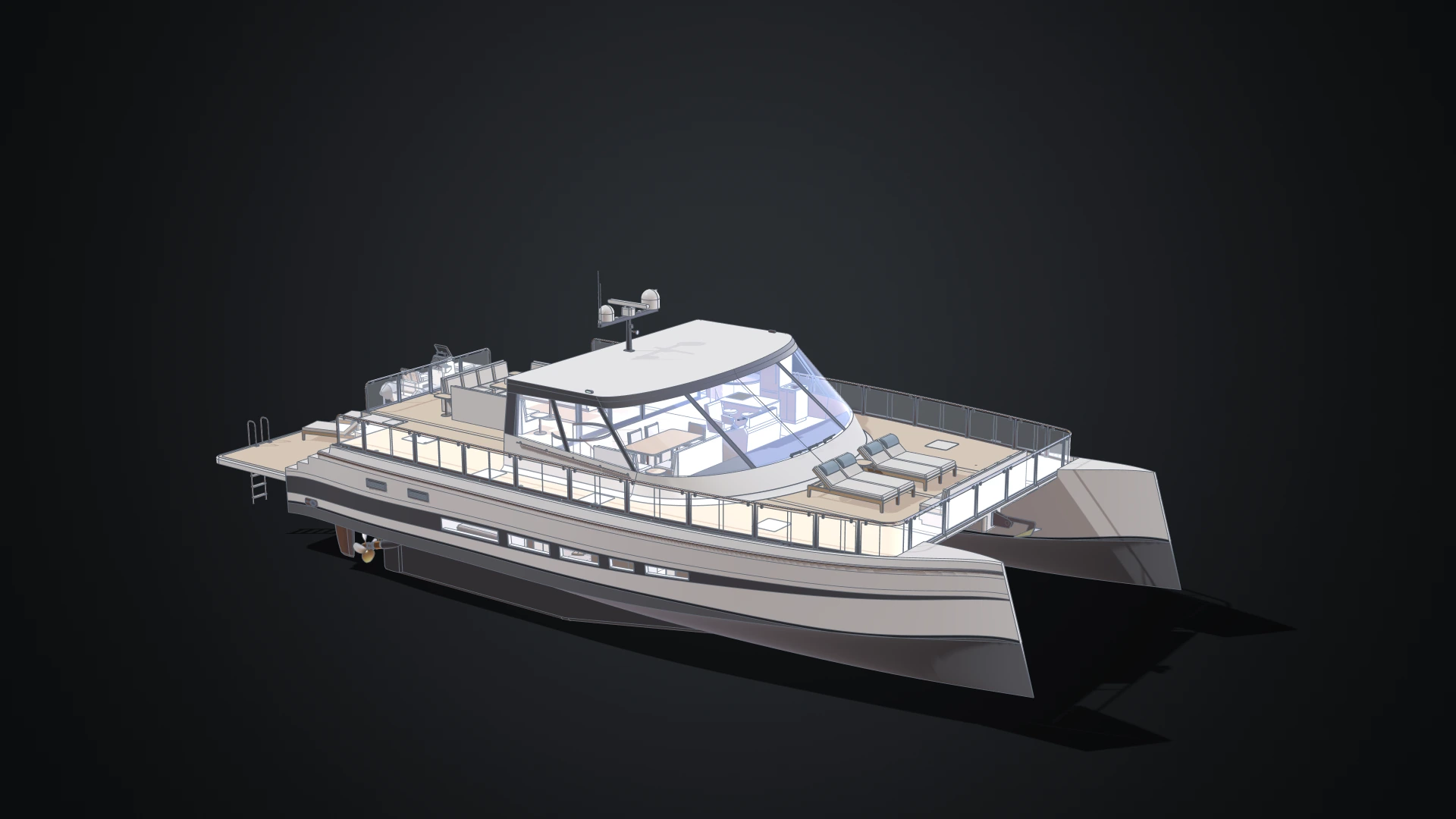
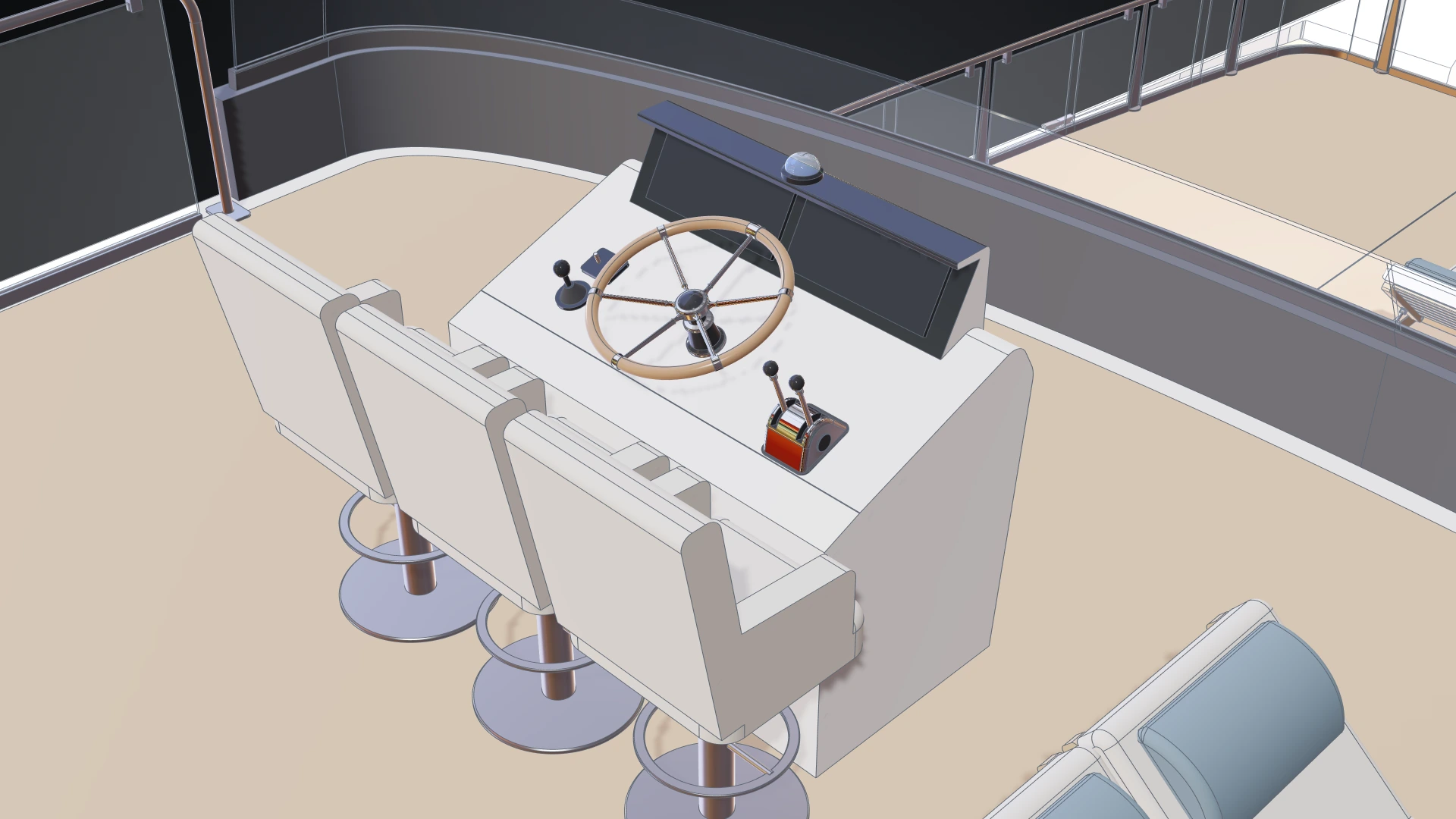
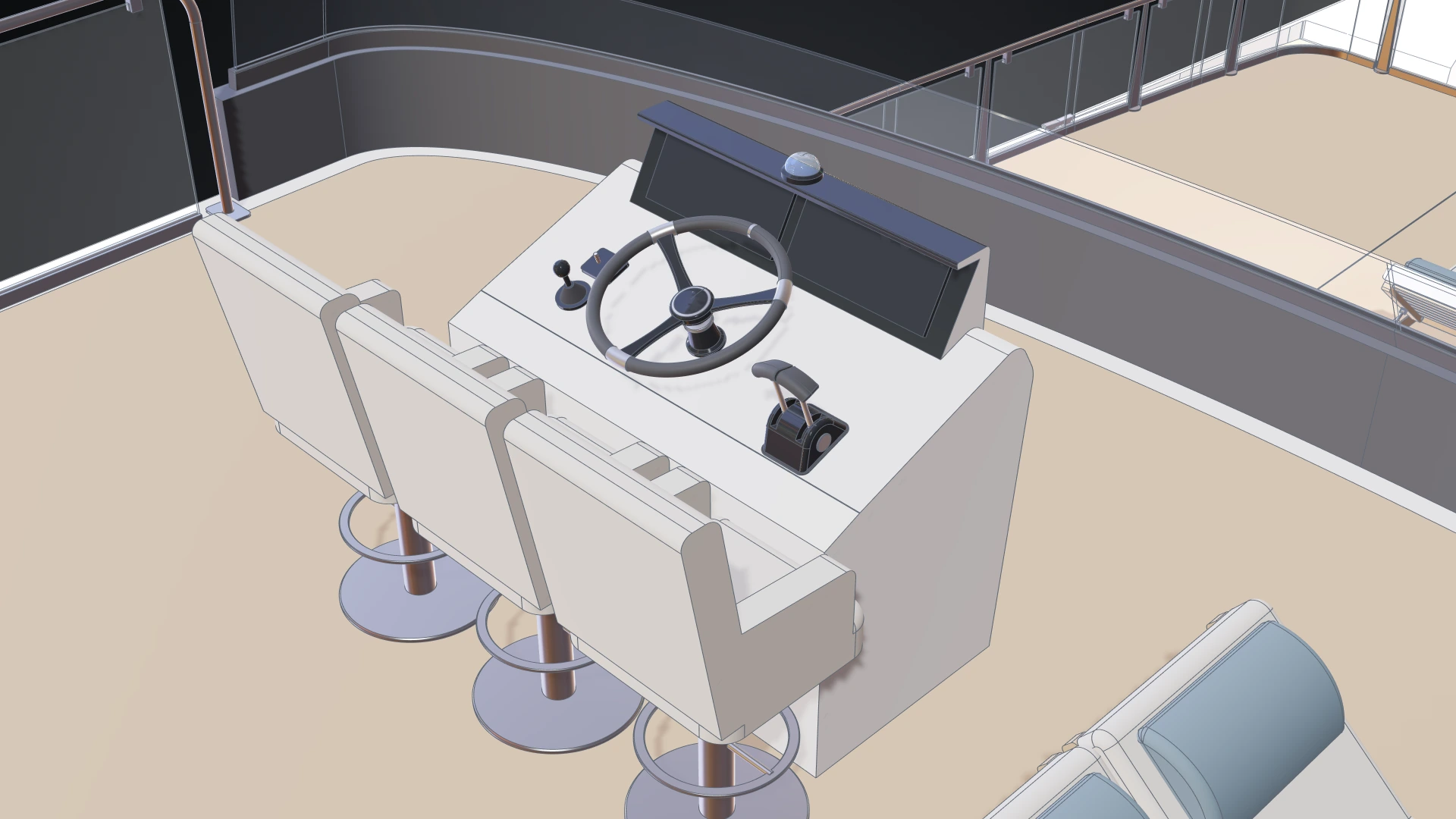
The size is only two of the boat's eight parameters. upperDeck picks a flybridge with a hardtop, an open flybridge or a coupe. helmStyle picks one of three wheels and throttles as a set: teak and chrome, piano black and leather, or carbon. tenderAboard says yes or no to the tender. Across its assemblies, 197 components carry a suppressed expression over those values, so each option is a choice you make in one place, and it reaches everything that depends on it.
A change like that rebuilds only what depends on it, so on the whole boat it took a few seconds. The bill of materials follows too: 464 placed parts with the flybridge, 455 with the open one and 325 as a coupe.
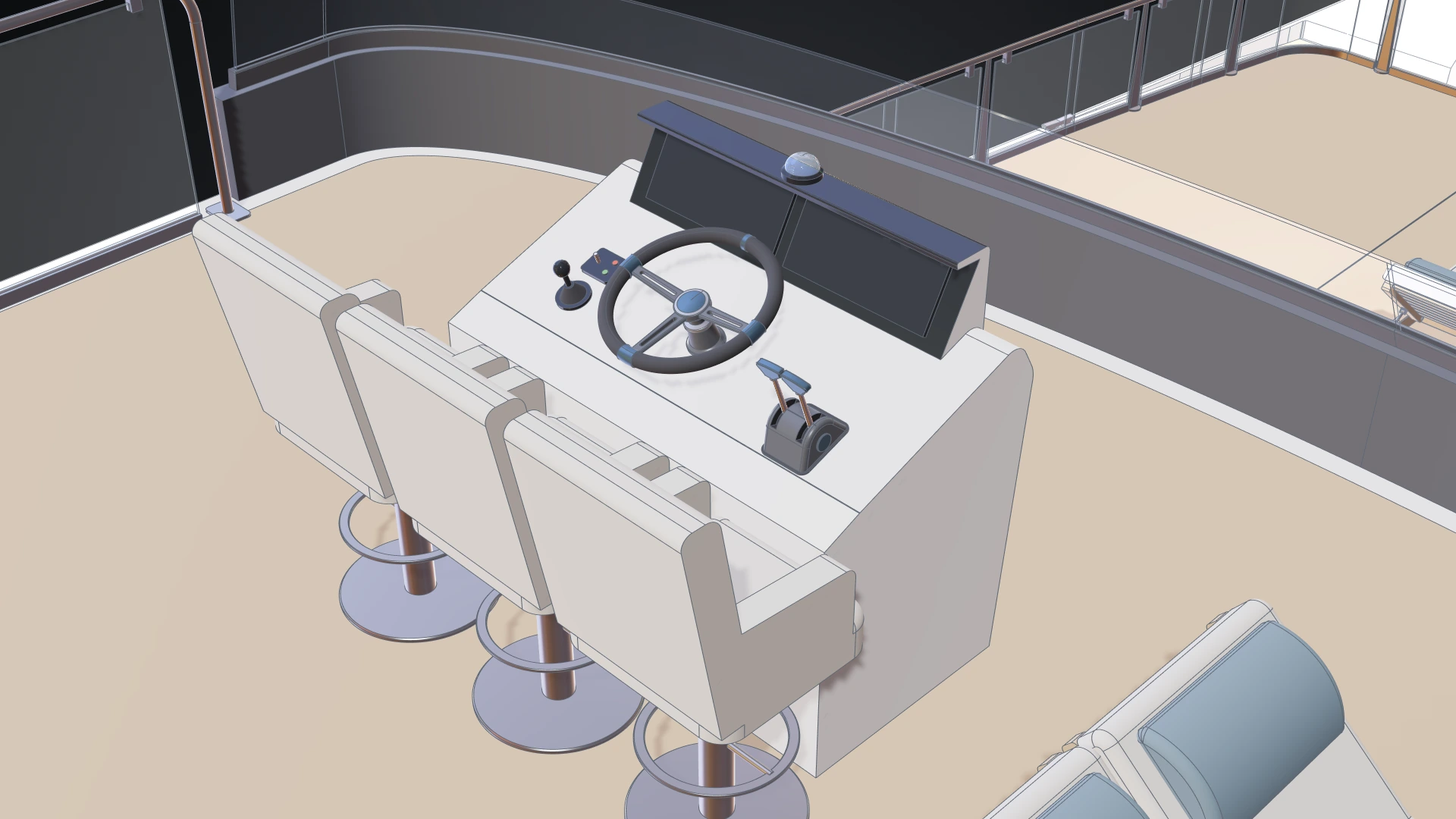
New in v1.6: standard parts
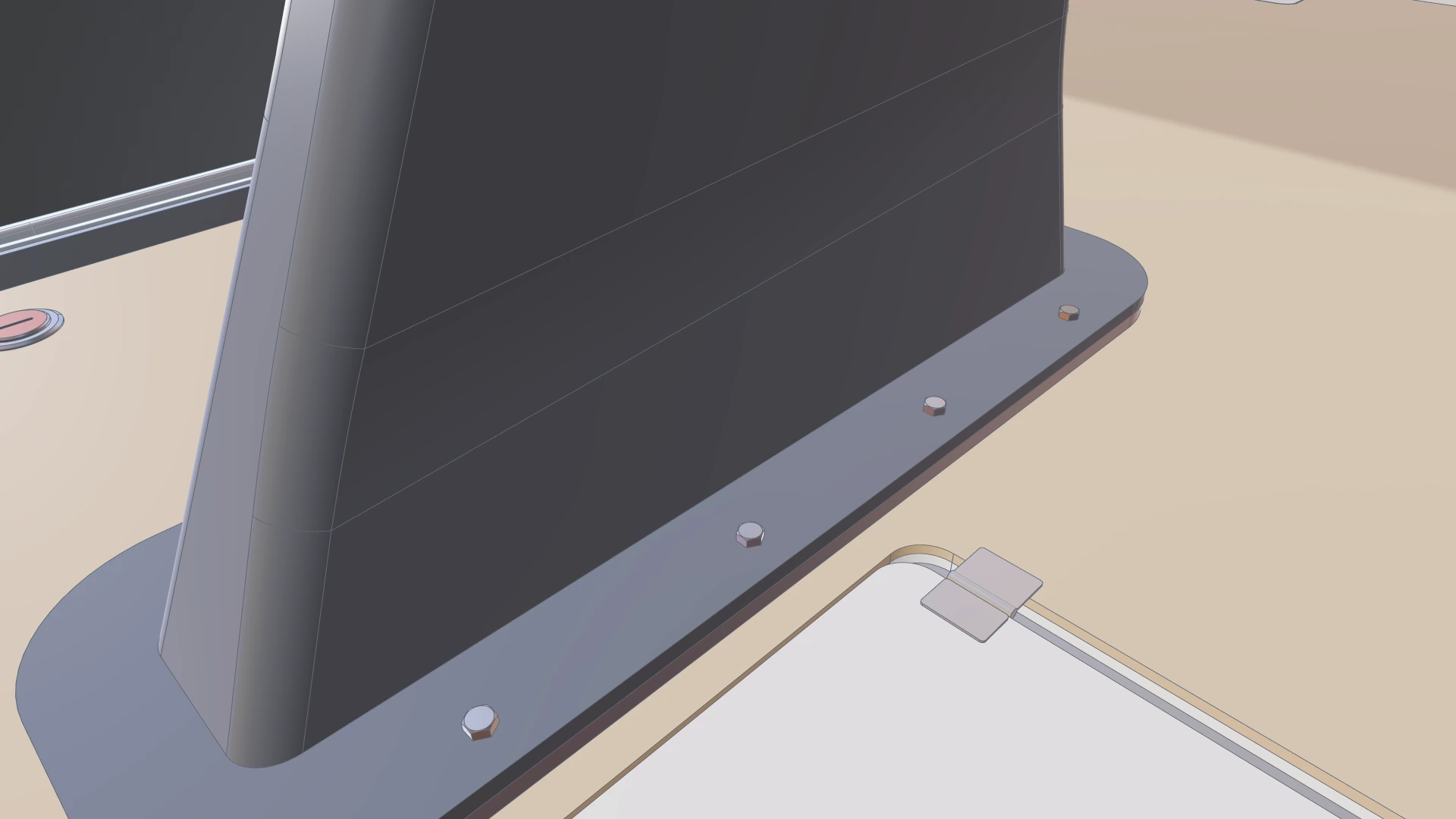
The boat's fins stand on real fixings. Eight M16 x 40 hex bolts to ISO 4017 hold down each one, through clearance holes in its flange and into a tapped stainless plate under the deck.
That bolt is one document with one feature, an ISO hex bolt from the kernel, sized by its parameters, and it is the kind of document the new standard parts library makes for you. The library holds screws, bolts, nuts, washers, bearings, keys and gears to ISO, DIN and ANSI, and you drag one onto a face to place it. Replicate then puts one bolt on every hole of the set.
New in v1.6: play a parameter
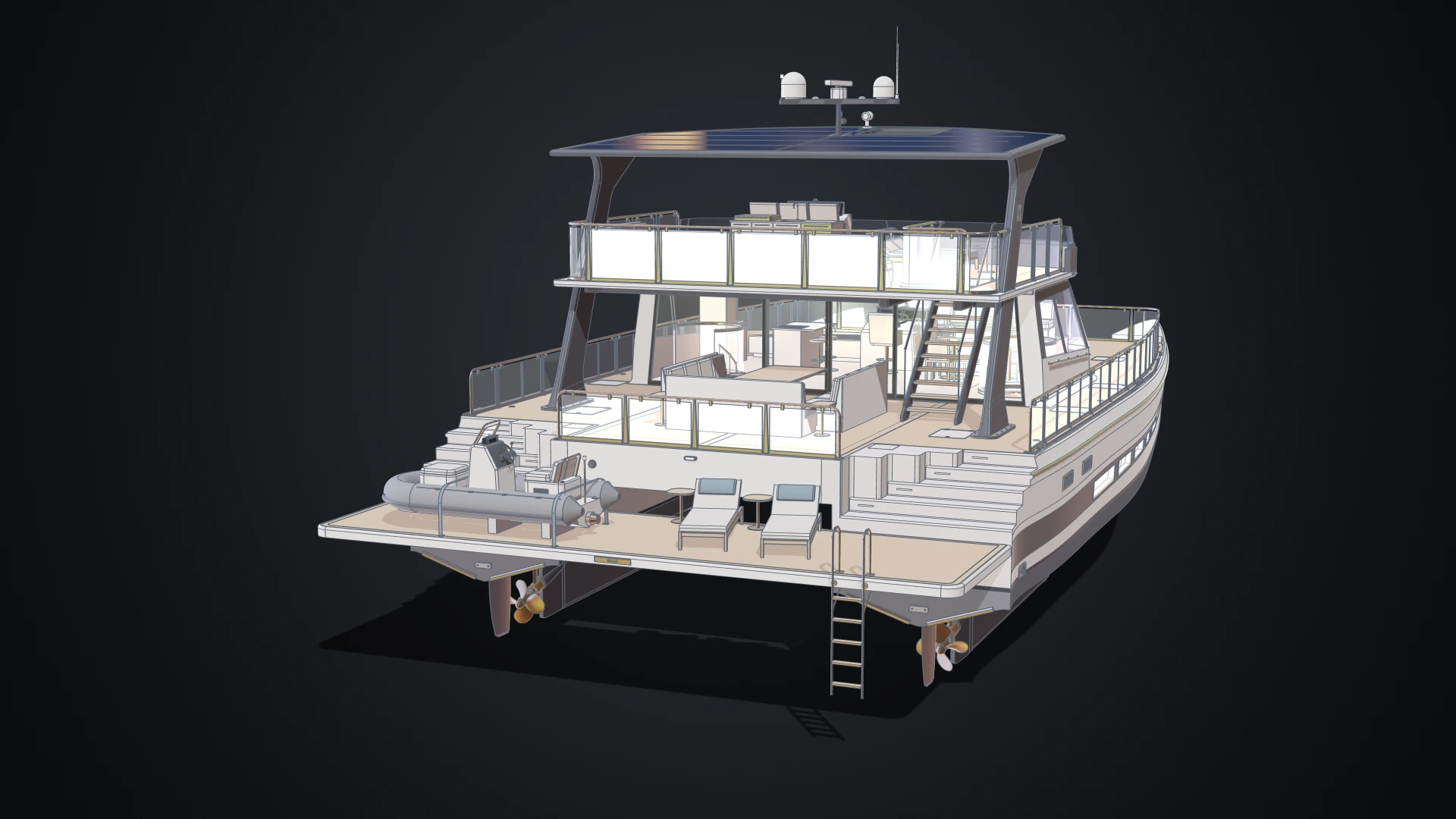
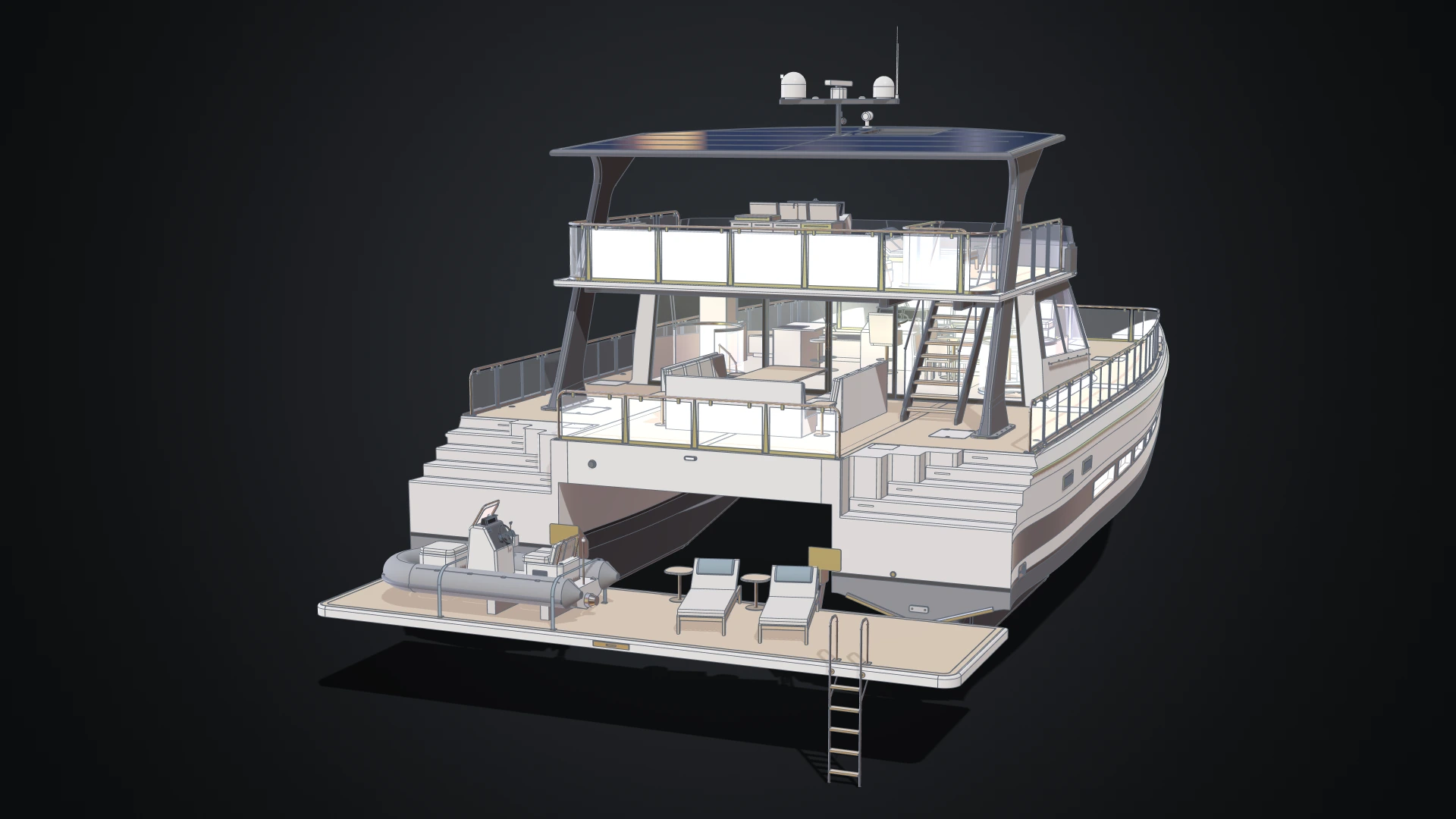
The swim platform is hydraulic. One parameter, platformLowered, swings its arms from raised for cruising to lowered at anchor, with its deck 400 mm under the water, and the rams, teak, loungers, ladder and tender go with it. The saloon's sliding doors work the same way.
Play, at the top of a parameter's panel, runs it between its limits so you can watch everything that reads it move. Joints pose at once. These moves are expressions, so the features rebuild for each step, and on the whole boat that gave us a new pose about every second and a half: steps rather than a smooth glide, but with the full model moving.
New in v1.6: show only what you are looking at
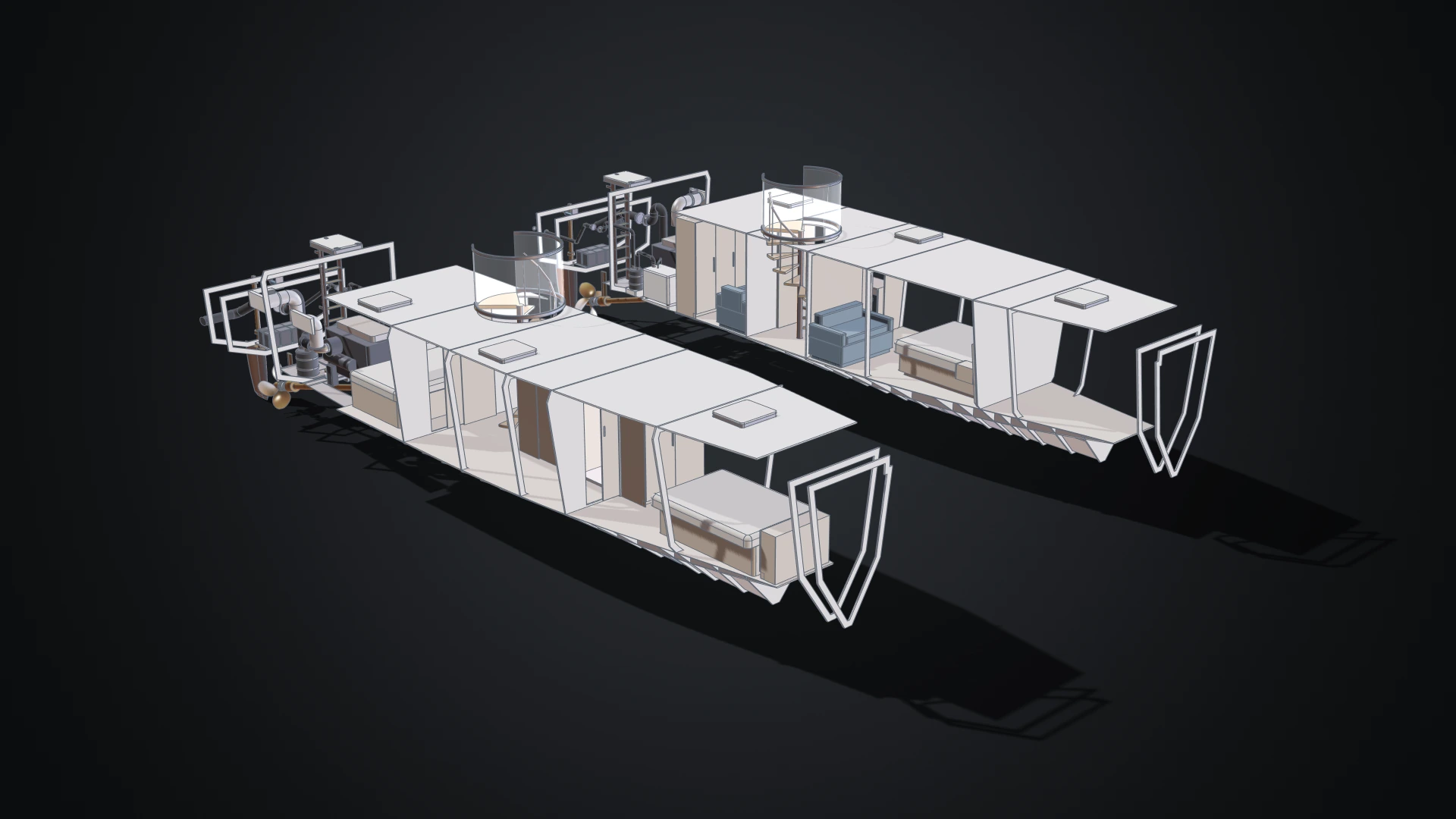
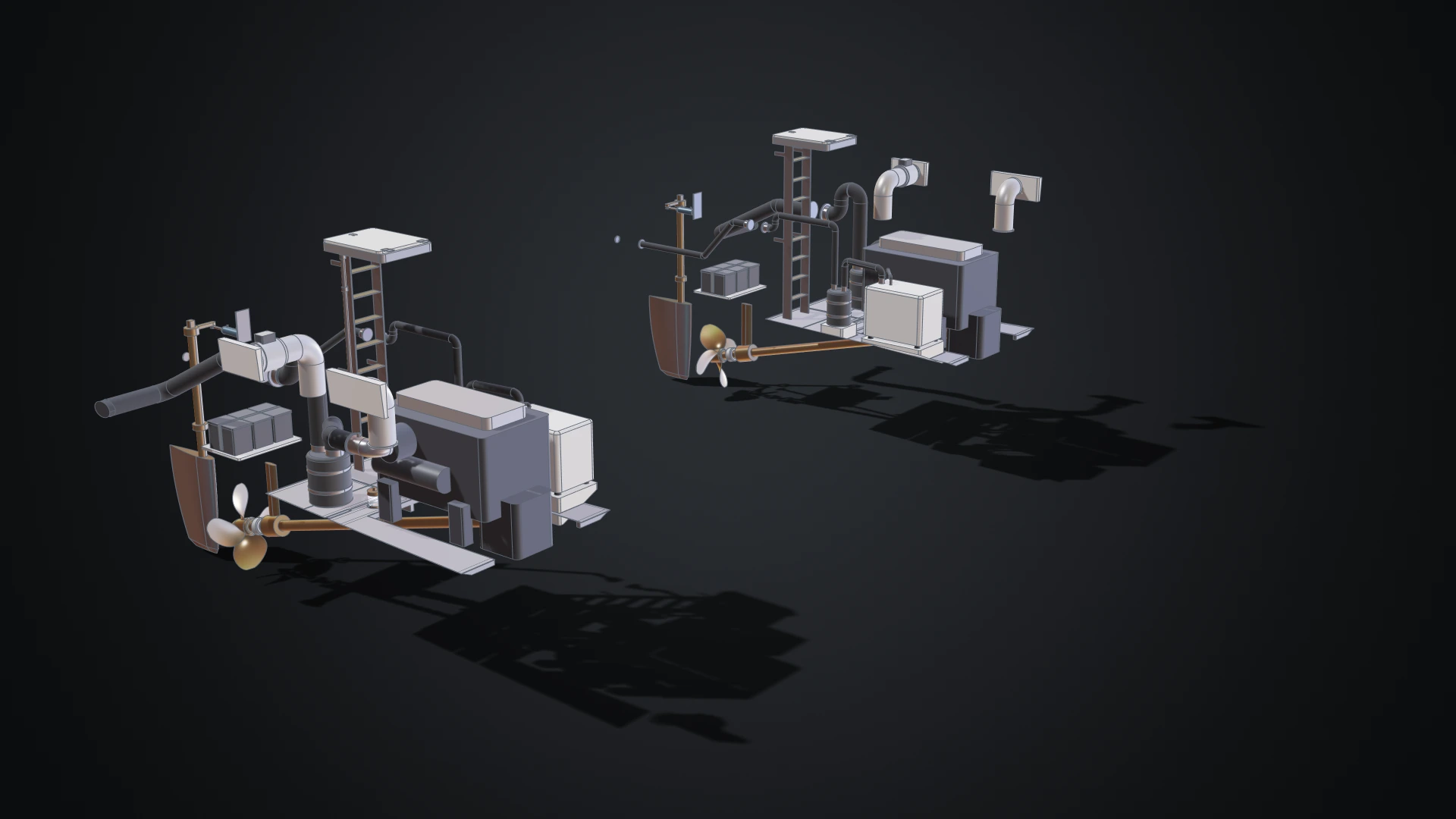
A boat hides most of itself. Hide, Show only these and Show all take components out of the view and bring them back, without touching the document, and the status bar says how many are hidden. Take the hulls and decks away and what was inside them stands on its own: ring frames, floors, cabins, spiral stairs and tanks, still in the shape of the hulls. Show only the drive train and you get the V-drive diesels, the shafts at their 13 to 15 degrees, the propellers and the spade rudders.
Inside, it is all there
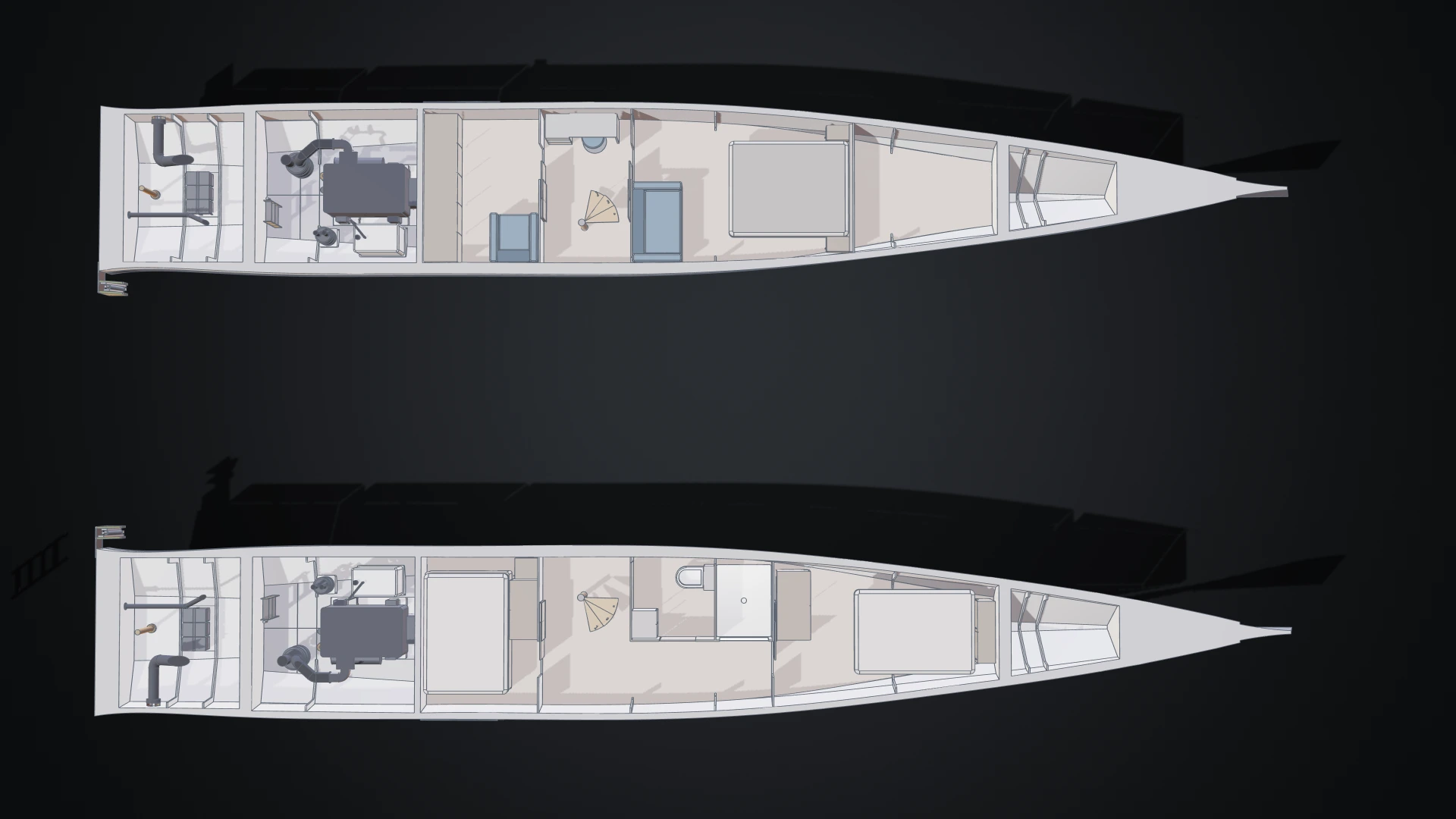
The section view cuts the boat with a plane and the kernel fills the cut, so the walls read as walls. Laid flat, half a metre above the waterline, it reads like a general arrangement drawing: machinery aft in both hulls, a guest hull with a head and a shower to starboard, and an owner's suite to port.
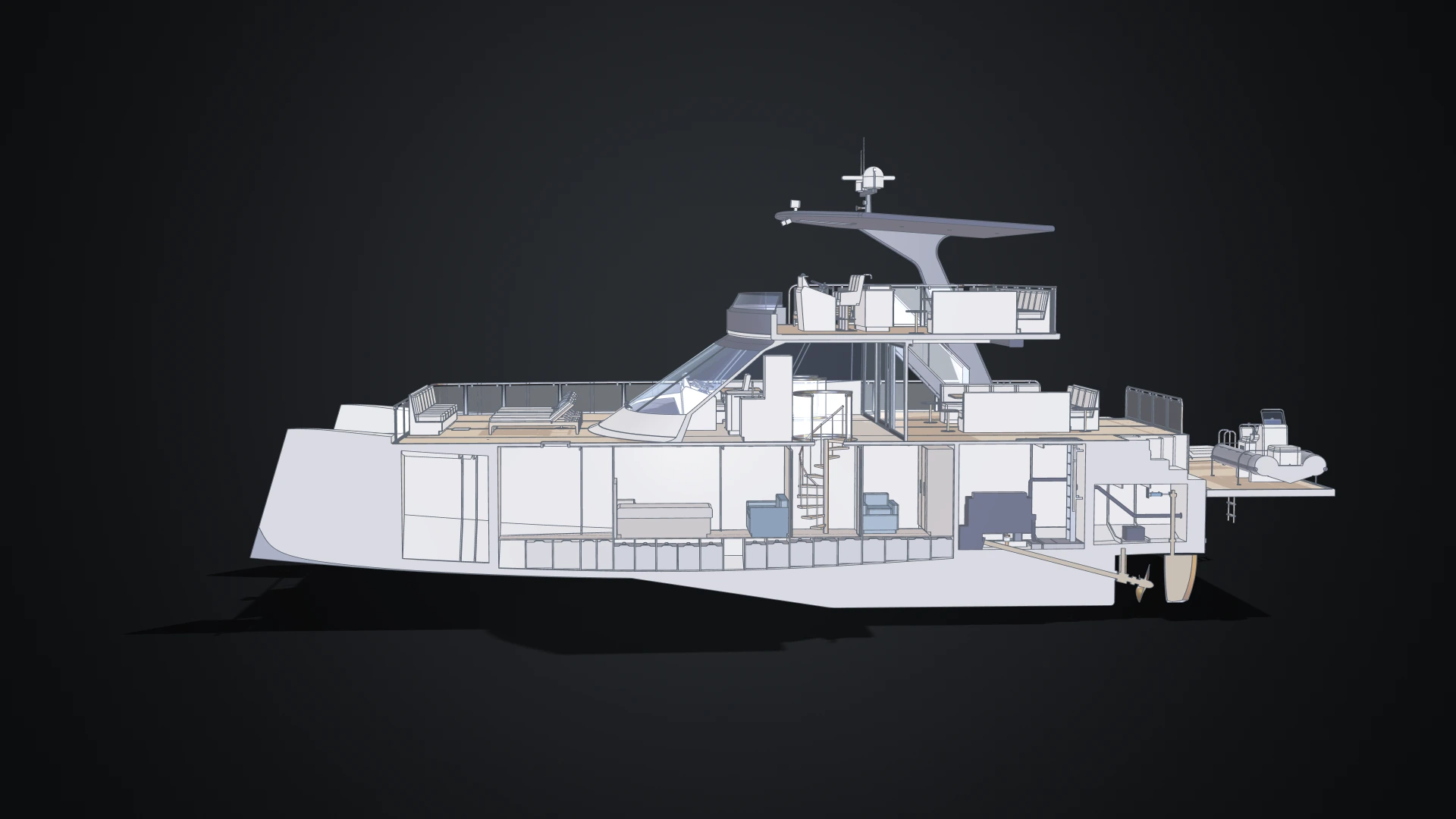
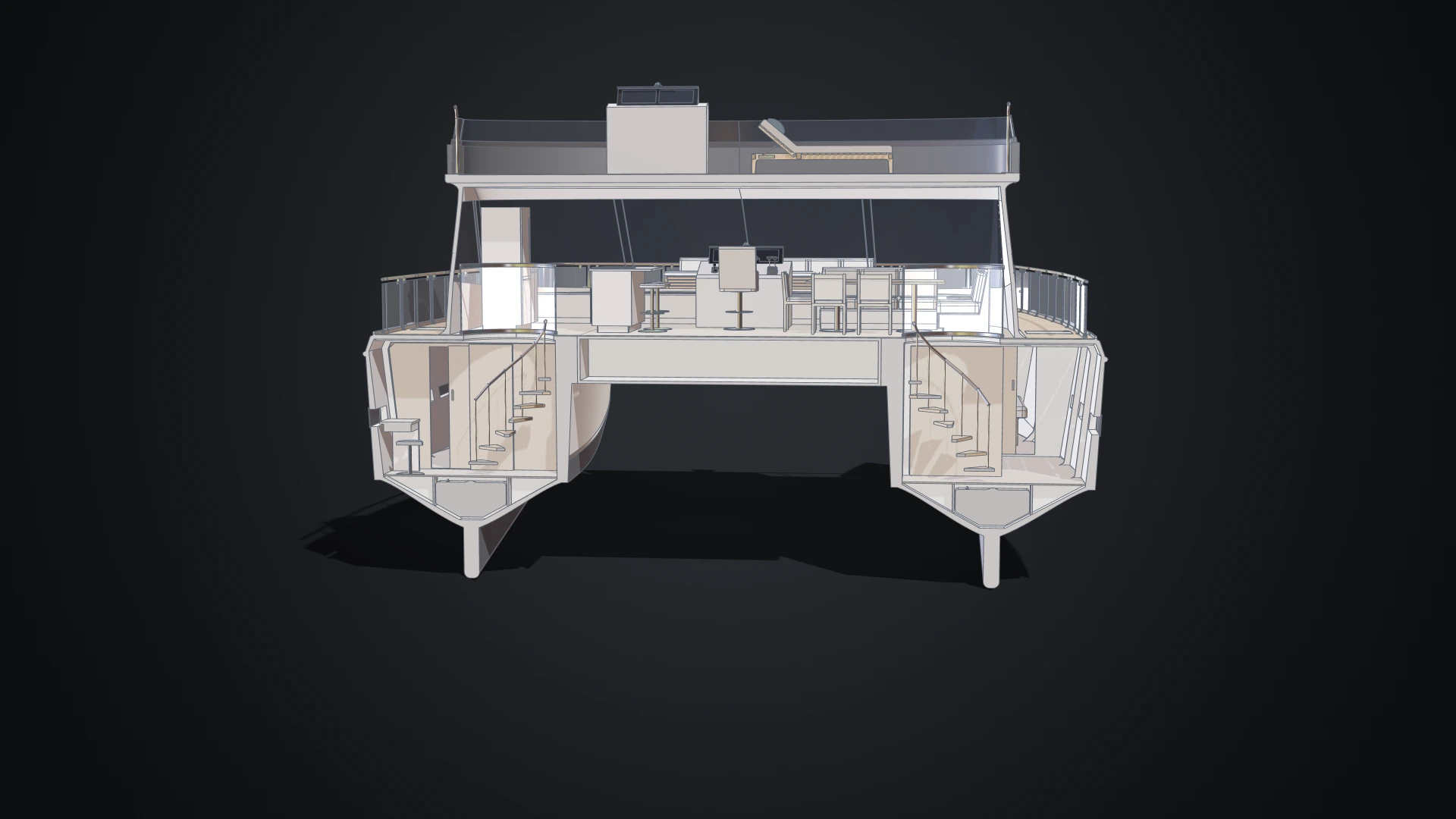
Along the port hull you pass the rudder, the propeller shaft rising to the engine, the stateroom and the tanks under its floor. Across the saloon you see a cabin and a spiral stair in each hull, the bridgedeck built as a box girder between them, and the galley island, helm and dining chairs above.
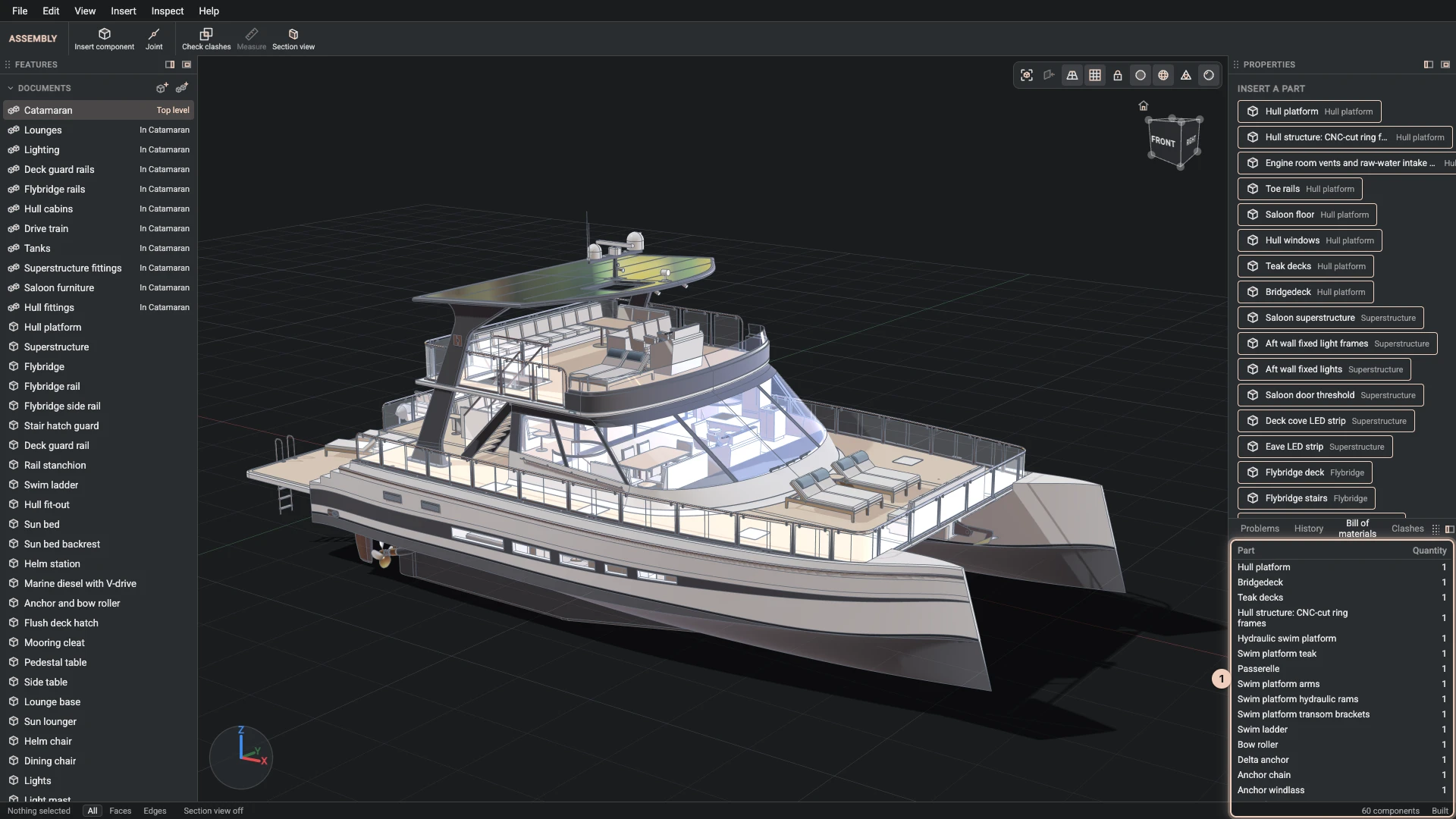
The bill of materials comes from the build, so it follows the size: at 20 metres it lists 464 placed parts on 219 lines.
A 20 metre model in a browser tab
A tolerance that suits a bolt is wasteful on a hull. So each part now meshes at a share of its own size, with a floor of 0.05 mm: a small part stays as fine as it was, and a 20 metre hull stops spending triangles nobody can see. On the 20 m Classic that takes the whole boat from 7.1 million triangles to 1.4 million, and meshing it took about a seventh of the time.
The view learned the same lesson. The camera's near and far planes now follow what is drawn, so faces at this scale no longer show through each other, zoom no longer sticks when you get close, and the sun's shadow is fitted to the model. Changing size rebuilds the whole boat, 87 seconds for the 15 metre boat and 131 for the 25 metre one on a machine that other jobs were also using, so long builds show a progress card with Stop and Build again.
Also new in v1.6
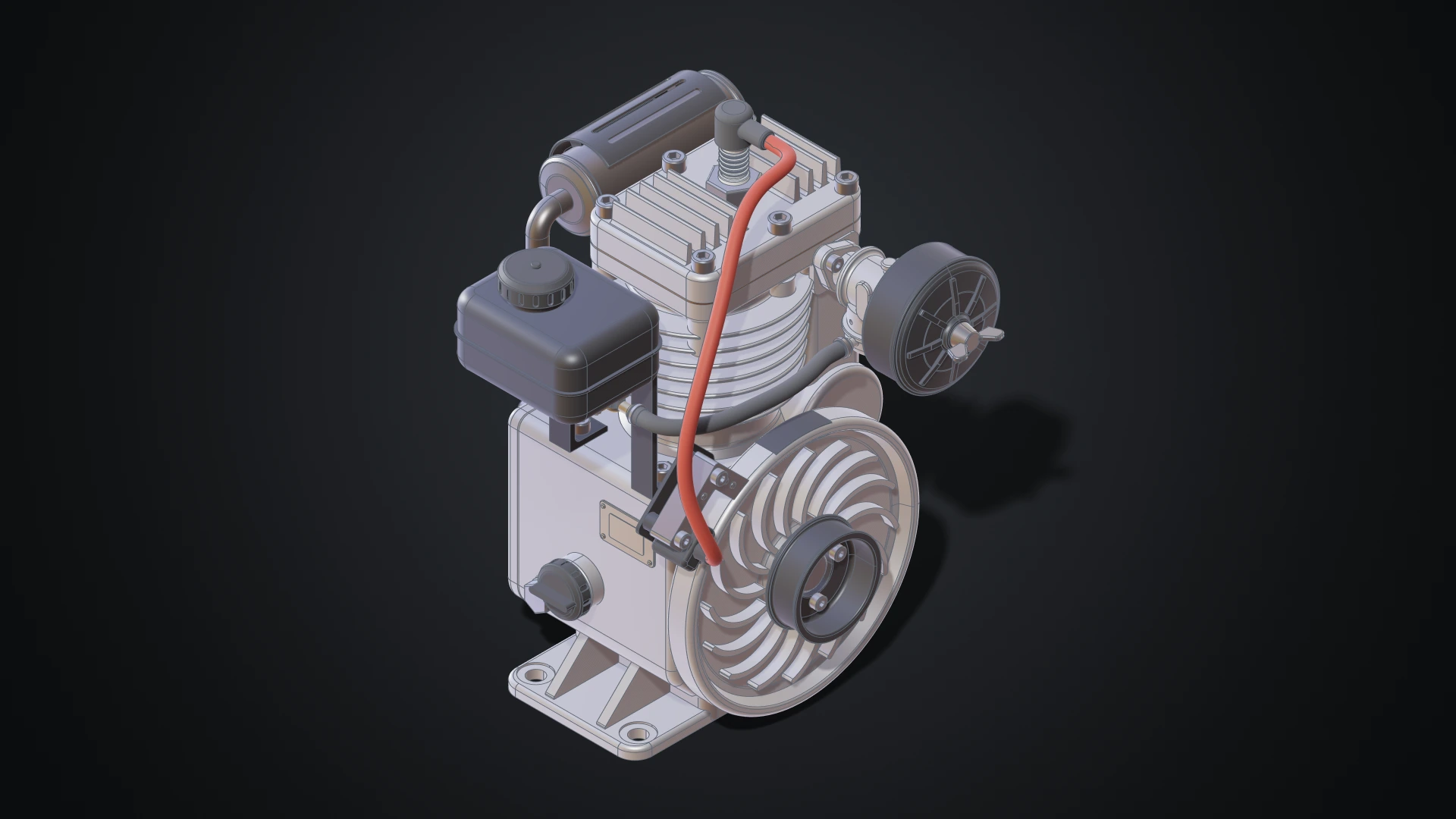
The boat doesn't need all of v1.6. The single-cylinder engine, our newest mechanical showcase, uses much of the rest:
- Machining: keyways, flats, ring grooves, knurls, splines and threads as features.
- Gears: gear parts, gears and racks in sketches, and Mesh gears to set two gears turning together.
- Fasten: seats a screw or bolt on every hole of a set and sinks a socket head into its counterbore. A hole can be sized by its fastener, from the standard's own lists.
- Units: a design works in millimetres, centimetres, metres or inches, and the library follows, with ANSI parts and binary fractions in an inch design.
- Sweep clashes: checks an assembly at even steps of a parameter, for parts that collide only part way through a motion.
- STEP as assemblies: a STEP file comes in with its parts and its tree.
- Open an example: the published showcases, a click away inside the Designer.
Open documents
The catamaran is the same plain JSON as any Designer project, the format Design documents describes. That is why an agent could write it, a script could test it and a person could review it in the Designer, all on one source.
It leaves as easily. STEP carries the assembly tree, names and colours, and GLB exports are in metres now. The boat's other life, as a configurator, gets a post of its own.
Who can use it
Making and changing designs is part of the Gold plan. Anyone can open a design that is shared with them: turn it, inspect it, measure it, cut it with a section and switch its configurations.
Try it
Open the Designer, play your first part, then see the boat and four other projects on the showcases page. A link to open the boat itself will follow here. We'd love to see what you make.